| First Technical Session of 27th Planetary Congress of ASE Held in Tsinghua University | |||||
| |||||
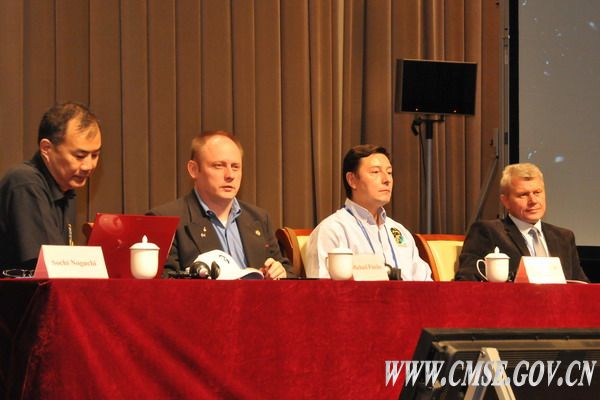
【September 11, 2014, CMSP News】The first technical session of 27th Planetary Congress of ASE was held in Tsinghua University on September 11. During the conference hosted by Russian astronaut Oleg Novitskiy and Japanese astronaut Sochi Noguchi, astronauts exchanged opinions around the theme of space education and international cooperation and interacted with Tsinghua University students.
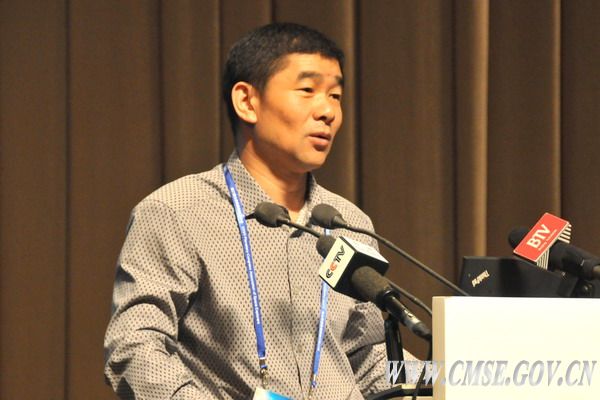
Figure 1: The first technical session of 27th Planetary Congress of ASE (Taken by Ding Ying) Chinese astronaut Liu Boming made a speech titled “China’s First Extravehicular Activity” on behalf of Shenzhou 7 crew. The success of Shenzhou 7 mission indicated that China had become the third country after the U.S. and Russia that has independently mastered EVA technology. Liu Boming said, “It is the strong faith and willpower that enable astronauts to accomplish missions smoothly. Human space is common enterprise of mankind. I hope all the spacemen can join hands to make joint efforts for peaceful development of mankind.”
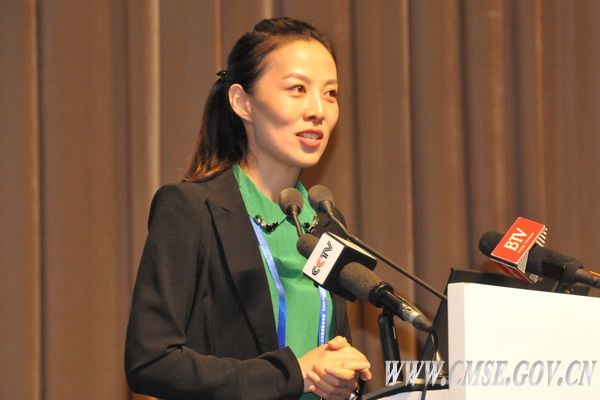
Figure 2: Liu Boming made a speech (Taken by Ding Ying) China’s first space teacher Wang Yaping gave a speech with the title of “Lessons from Outer Space, Seeding Dreams”. She said, “There is no end to space exploration. Human space education has far-reaching implications. I hope that in the future I can contribute more to human space education using my special experience in space and be a good space teacher in the heart of the youth forever.” Besides, Wang Yaping also sent posters signed by astronauts, teachers and students who have participated in China’s first space lessons to Mr Dorin, President of ASE.
Figure 3: Wang Yaping made a speech (Taken by Ding Ying) Russian astronaut Sergei Ryazanski gave a speech “The Role of Space Education”, in which he introduced different stages of space education. American astronaut Michael Fincke illustrated the major projects in International Space Station and the development of the future American deep space exploration programs such as the new-generation carrier rocket SLS and Orion spacecraft. Following the speeches, astronauts answered questions from Tsinghua University teachers and students. When asked about the prospect of human space exploration, American astronaut Michael Fincke expressed his belief that human would land on the moon or even the Mars again in the near future. Over 200 people have participated in this technical session, including Tsinghua University teaching staff and its students, astronauts, experts and scholars from all over the world. (By Yu Yanjuan) (Editor : 系统管理员) | |||||

| Home |
|